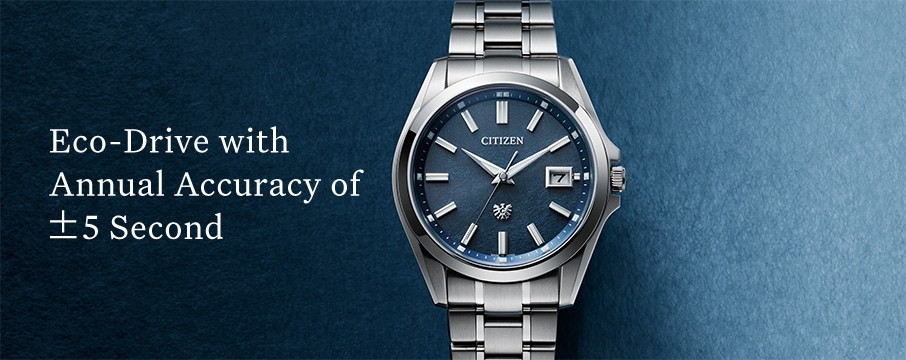
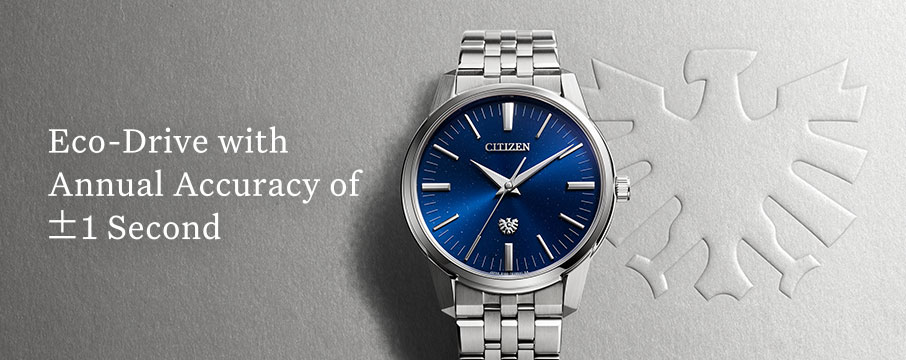
Eco-Drive with Annual Accuracy of ±5 Seconds
Hand-dyed Indigo
Washi Paper Dial Limited Edition

SCROLL
A colour. A mood. A feeling.
A new take on the indigo washi dial
in deep and intense ‘Japan Blue.’
The subtle, complex dial pattern,
created by dyeing ultra-thin washi
with the pole-wrap shibori technique,
makes every piece truly one of a kind.
Add a note of luminosity to your life with
this unique blend of beauty and precision.
Features
Creating a new expression of ‘Japan Blue’
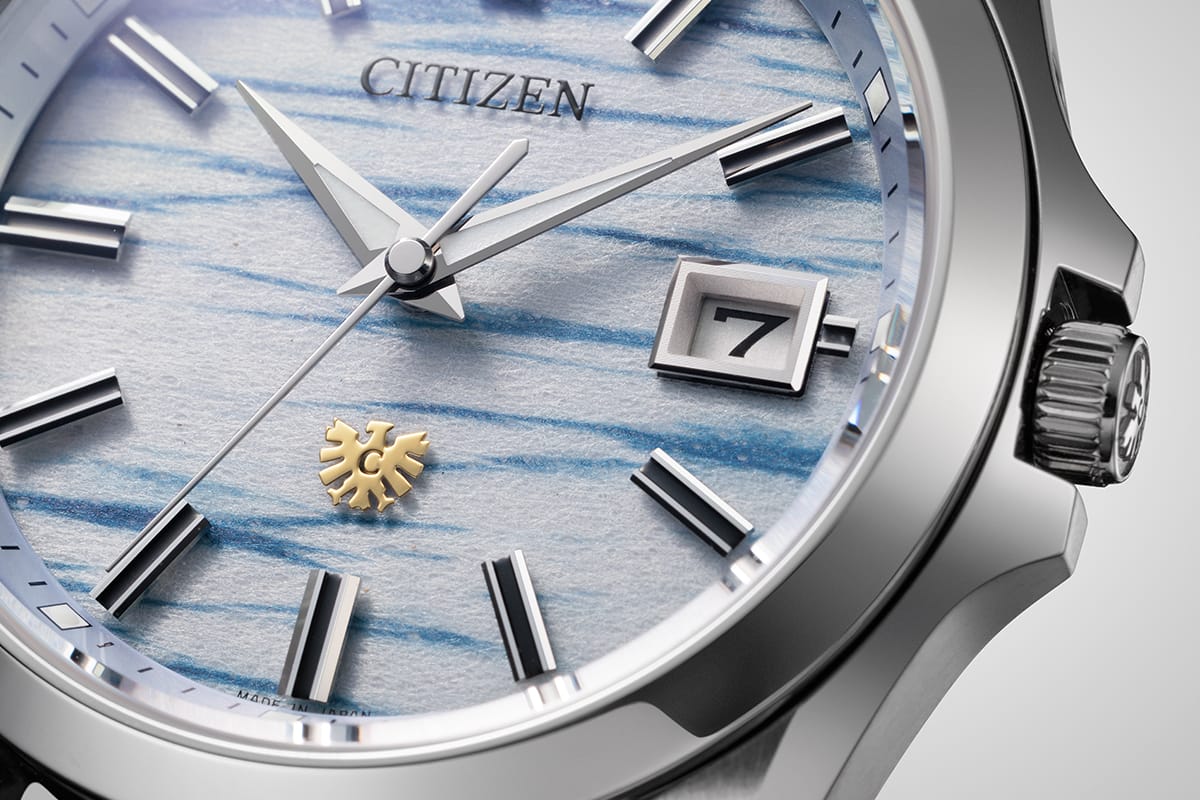
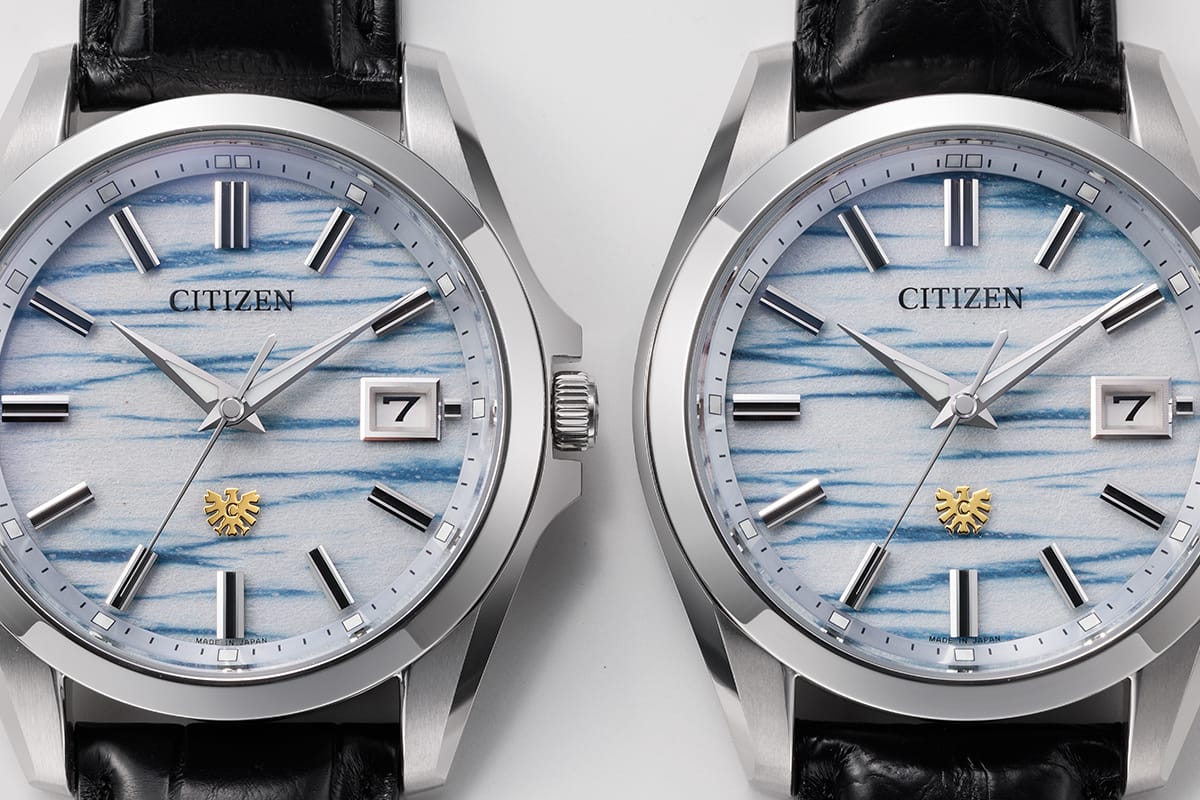
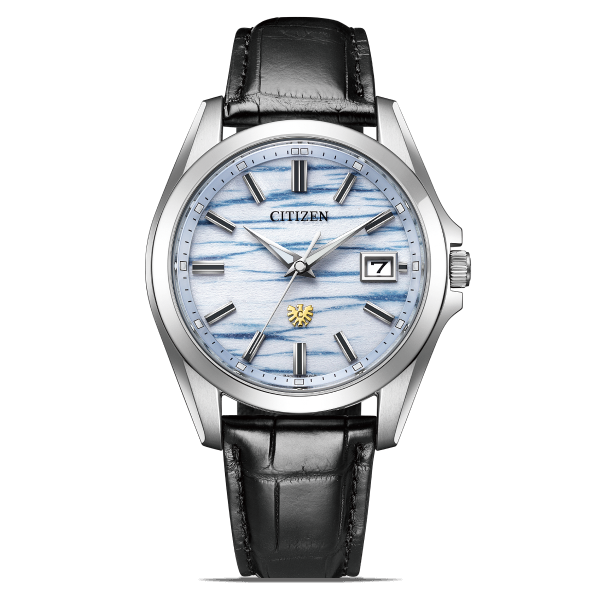
This hand-dyed indigo washi dial was created by applying an ancient Japanese indigo-dyeing technique to ultra-thin Tosa washi. CITIZEN collaborated with Watanabe’s, an artisanal dye workshop in Tokushima Prefecture, to develop a new and striking dial pattern that’s still sufficiently light-permeable for Eco-Drive to power the watch.
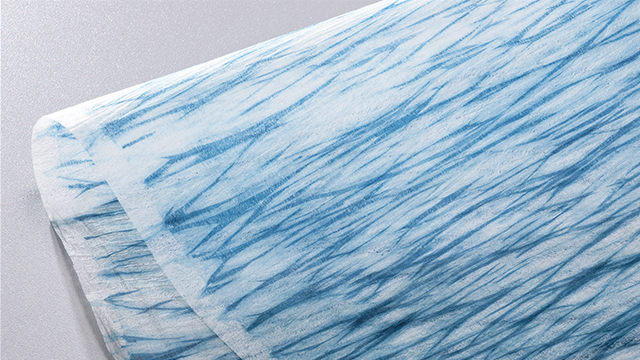
What sort of design works best within the small scope of a watch dial? Tackling that question ultimately led us to the technique known as pole-wrap shibori dyeing. For the design motif, we drew inspiration from mist, a fleeting and mysterious natural phenomenon found in Japanese literature and painting since time immemorial. An indigo tie-dye pattern evocative of mist floating in the sky is applied to the washi, creating a contrast between the white background and the delicate bands of indigo. The watch looks quite different with the angle of the light—quietly chic one minute, brilliant and opulent the next.
A one-of-a-kind shibori pattern that’s forever changing
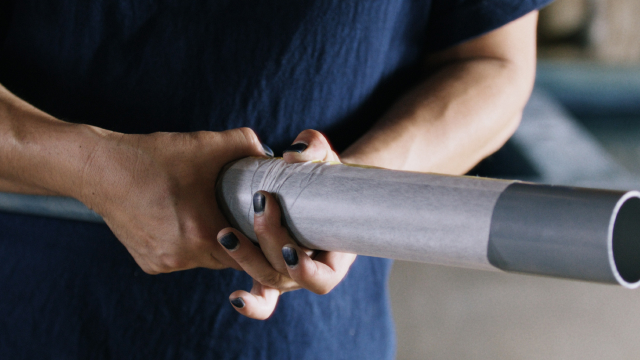
Different shibori patterns are created depending on how tightly the pole-wrapped washi is scrunched or compressed. Every single dial has a unique pattern as a result.
Our goal was to create a distinctive shibori-dye pattern that played up the gorgeous contrast of white and indigo. We settled on the so-called pole-wrap shibori technique. Typically, this involves wrapping fabric around a pole, tying it with string, then scrunching it up to the top of the pole to create wrinkles and folds before dunking it in dye. Performing this process with washi rather than fabric adds a whole other level of difficulty. That is why we opted to use Tengu-jo washi, a variety of Tosa washi that is as strong as it is thin.
The biggest challenge we faced when making the dial was figuring out just how much we could scrunch the washi without tearing it. The tighter the washi gets scrunched up, the smaller the gaps between the patches of colour, so we had every incentive to push the technique to its limits.
The use of washi rather than fabric was not our only innovation. We also dipped the washi in the dye mixture several times, scrunching it down to create different wrinkles, pleats and folds every time. Repeating the process like this produced an even more delicate and intricate design, perfectly in tune with the small dimensions of a watch dial.
Building a layer of experimentation onto the basic pole-wrap shibori dyeing technique resulted in a series of genuinely one-of-a-kind dials. It is no exaggeration to say that no two of the two hundred pieces of this limited edition model have the same dial design.
Learn more about Tosa Tengu-jo washi
Comment from the creator
I wanted the washi to look like fabric
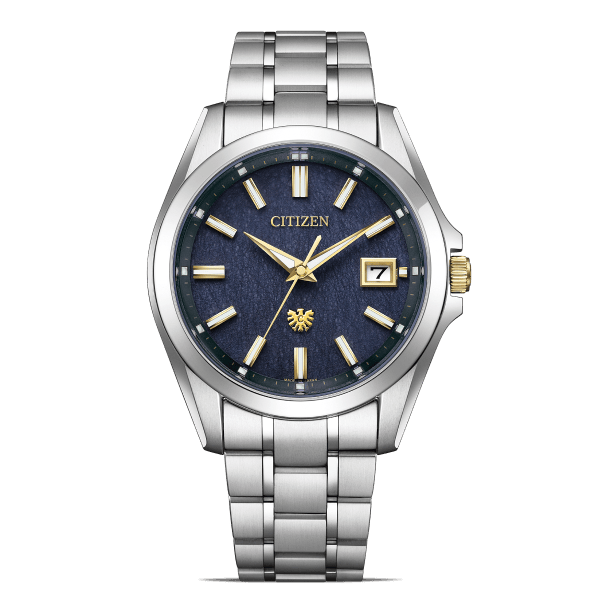
“Typically, shibori dyeing is a technique that’s applied to fabrics, so the idea of trying to create the same sort of pattern on washi was a pretty bold one. To be honest, the only reason I managed it was because I used Tengu-jo washi from Tosa, a type of washi that’s strong enough not to rip when you scrunch it up into tight folds.” So says indigo dye master Kenta Watanabe, the craftsman also responsible for AQ4091-56M, another Hand-dyed Indigo Washi Paper Dial Model from The CITIZEN.
“Having to do the whole shibori dyeing process several times was really hard work. Still, I wasn’t willing to compromise on quality just because I was using washi rather than fabric. I hope that customers who handle the watch will be struck by the beauty of the colour and the pattern, and will ask the store clerk if the dial material is painted fabric, only to be told, ‘No, it’s washi.’ I’ll be delighted if interactions like that take place in stores.”
Technologies that make a material difference
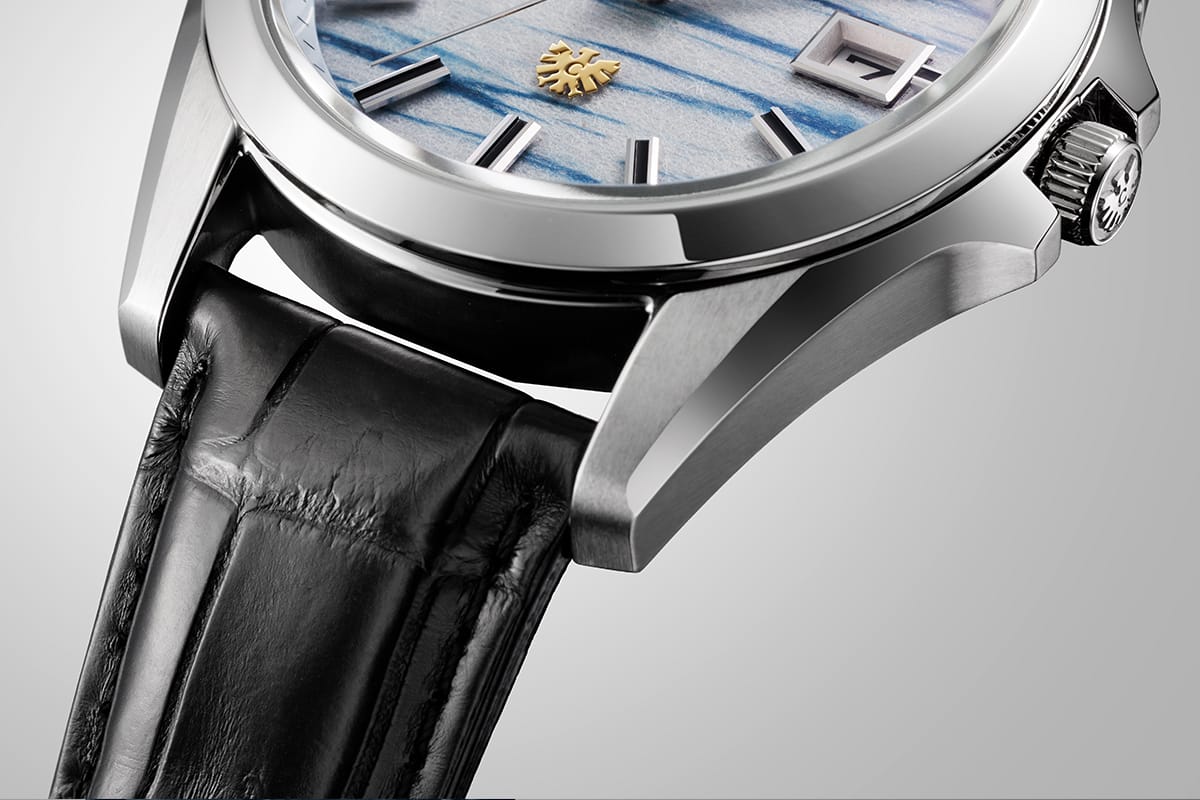
The case is Super Titanium™, a CITIZEN proprietary material developed and refined over decades, which has been treated with Duratect Platinum to give it a bright, almost transparent tone. As well as being resistant to nicks and scratches, the case will always retain its pristine shine. The distinctive and sophisticated-looking crocodile leather band (LWG certified) complements the indigo nicely.
Among the model’s many functions are a perpetual calendar (requiring no manual adjustment until February 28, 2100) and instantaneous date change with the date switching at midnight precisely.
Leather Working Group (LWG) is an international not-for-profit organisation. Its members include brands, tanneries and chemical suppliers. LWG evaluates the safety and environmental performance etc. of the leather manufacturing process and awards certification only to tanneries that pass its rigorous audits.
Line Up
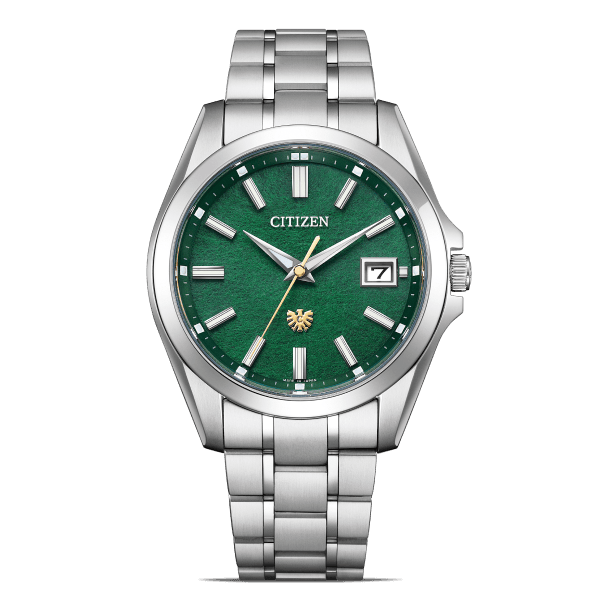
Crafting the next ideal:
The CITIZEN
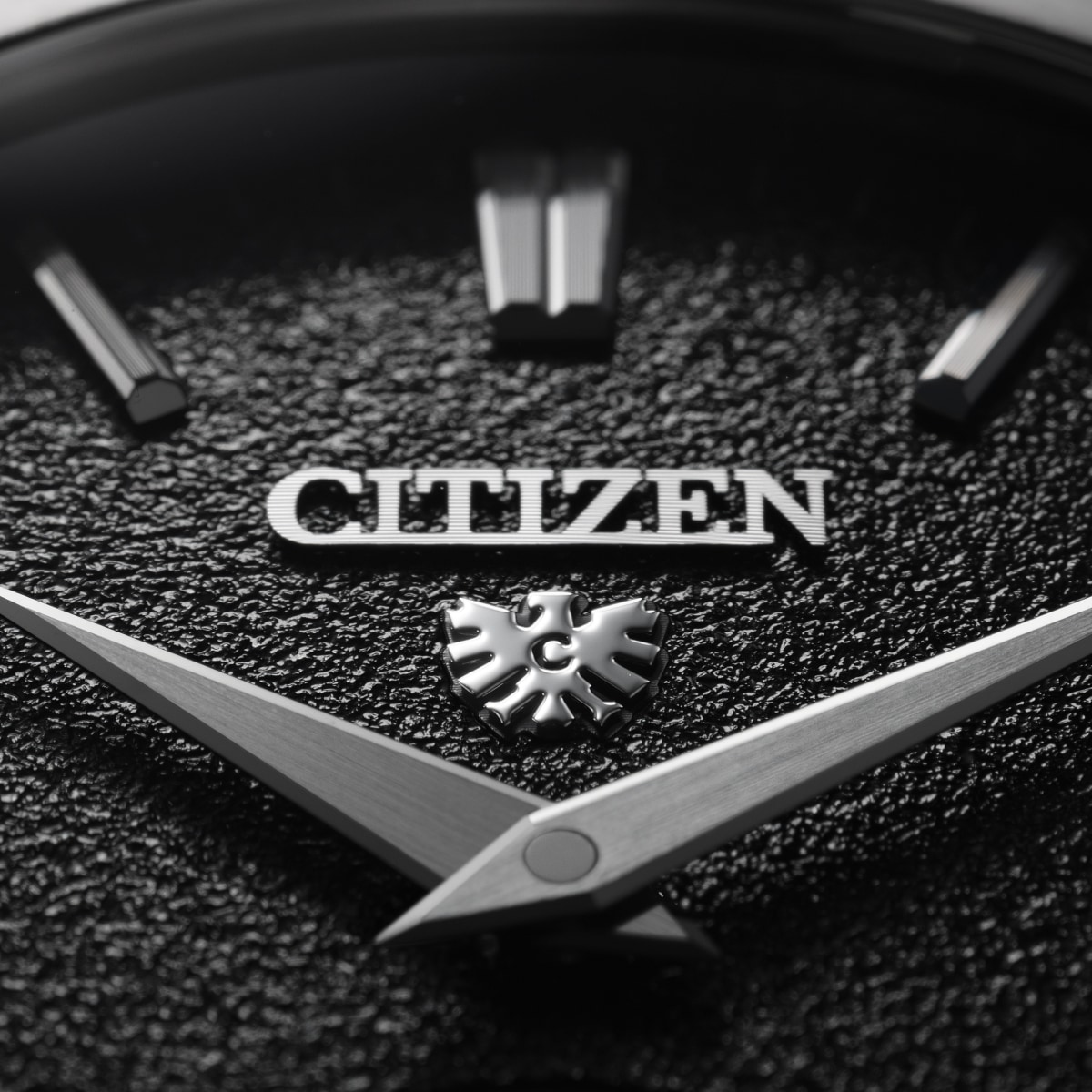
The eagle mark:
Symbol of The CITIZEN
The eagle symbolises The CITIZEN’s twin commitments to “looking ahead and pursuing the ideal” and to “becoming an integral part of users’ lives.” The mark is discreetly engraved on the dial and crown of some models.
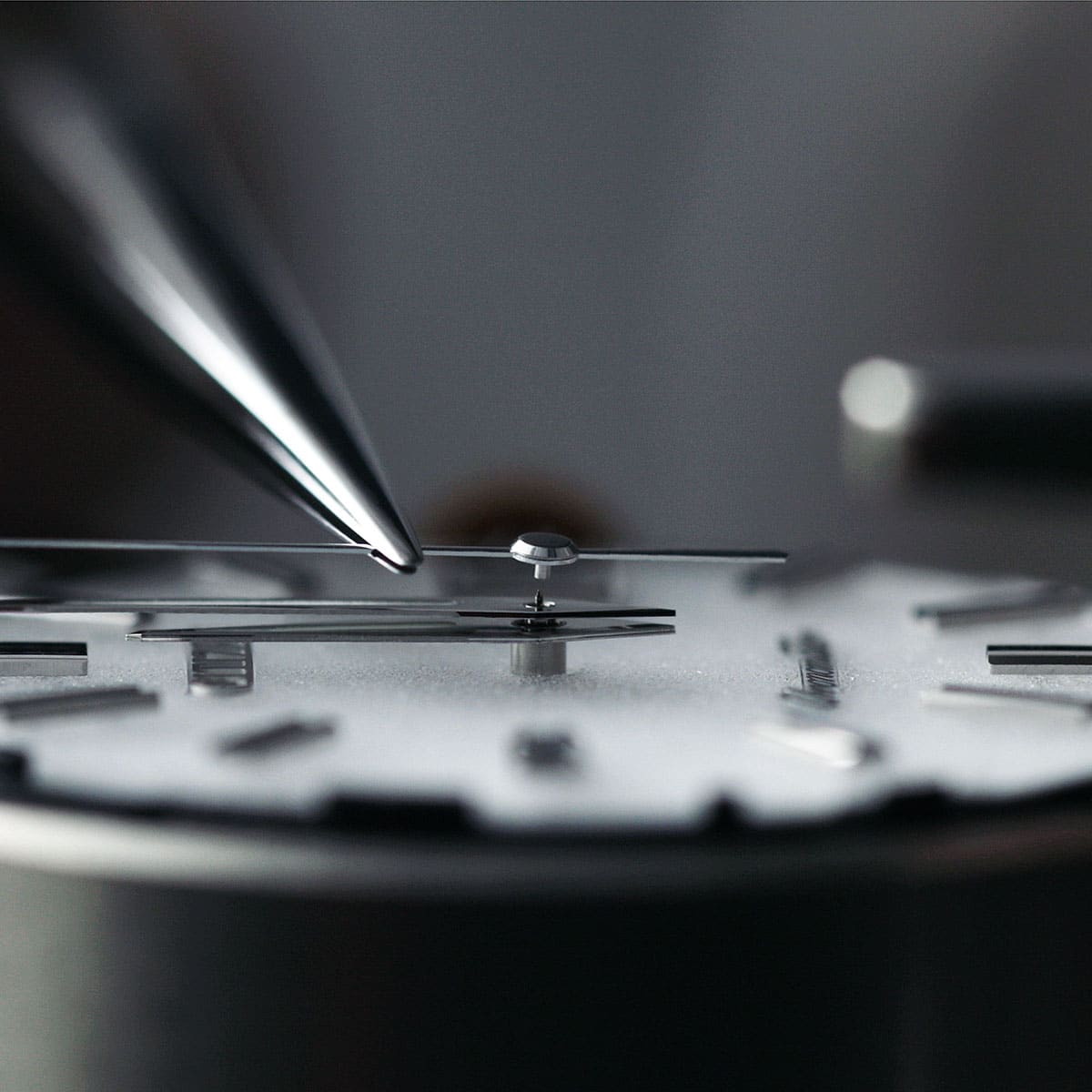
The master artisans who
breathe life into our watches
The CITIZEN watches are made at CITIZEN's special watch workshop nestled deep in the Nagano countryside. They are hand-assembled down to the last component by our highly experienced master watchmaking Meisters.